© 2026
English, French, German, Spanish - Spain, Japanese, Korean, Simplified Chinese, Italian, Indonesian, Polish, Portuguese - Brazil, Turkish
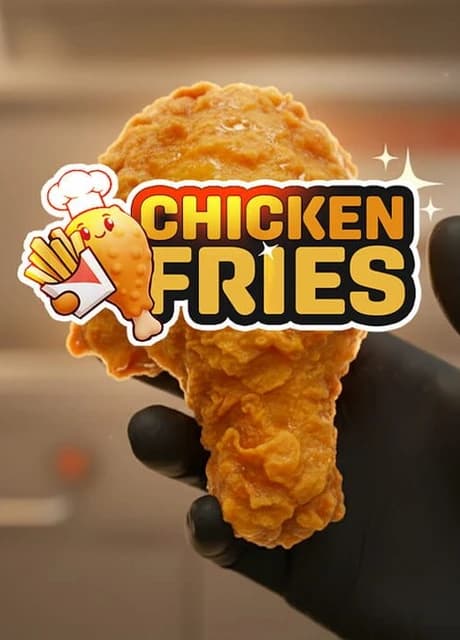
Chicken Fries is a first-person restaurant simulator where you run a fast-food kitchen: prepare meals by hand, manage fryers and inventory, serve customers, and survive the daily chaos of a busy restaurant, one chicken at a time.
Chicken Fries is a first-person restaurant simulation where you take full control of a fast-food kitchen. Cook meals step by step, manage multiple stations, restock ingredients, and keep customers moving during intense rush hours. From smooth services to total kitchen chaos, every shift tests your speed, organization, and restaurant management skills.
Chicken Fries puts you behind the counter of a bustling fast-food restaurant. You aren't just clicking buttons; you are physically managing the kitchen workflow. You’ll need to bread the chicken, drop the baskets, salt the fries, and assemble trays, all while keeping an eye on your dwindling stock of ingredients.
Cooking is only half the job. Managing your stock is just as important as cooking the food.You have to balance your budget between buying ingredients and saving your hard earned money. Keep a close eye on your pantry during the rush. If you run out of chicken, sauces, or trays in the middle of a service, you’ll have to frantically order stock or face the wrath of hungry customers.
The customers in Chicken Fries have very little patience and specific needs.
You’ll need to prioritize orders, multitask like a pro, and keep your cool when the ticket machine won't stop printing.
Chicken Fries is a simulation game built around the idea that control should feel tangible. Every interaction is deliberate, every movement has weight, and every mistake has consequences. Rather than abstract menus or automated processes, you are physically present in the space, performing tasks exactly as they would happen in a real kitchen. This design philosophy creates an experience that feels grounded, demanding, and deeply immersive.
Players who gravitate toward this type of gameplay often appreciate simulations that transform ordinary jobs into complex, satisfying systems. The appeal lies in repetition, mastery, and efficiency — the same sense of calm focus people find while organizing shelves and managing customer flow in experiences similar to Supermarket Simulator, or handling rapid-fire orders and timing in environments reminiscent of Fast Food Simulator.
Success in Chicken Fries comes from understanding flow. Knowing when to prep ingredients ahead of time, when to pause, and when to commit fully during a rush is essential. There is no single correct strategy; instead, you develop a rhythm that fits your playstyle. Some players prefer cautious preparation, while others thrive by reacting quickly and improvising under pressure.
This rhythm-based gameplay will feel familiar to fans of simulations that reward patience and precision. The quiet satisfaction of cleaning and restoring spaces, like players experience in PowerWash Simulator, or gradually improving a run-down property piece by piece in House Flipper, translates here into learning how to move efficiently through your kitchen without wasting time or resources.
Although food preparation is central, Chicken Fries is just as much about management as it is about cooking. Inventory decisions, spending habits, and long-term planning shape the success of your restaurant. Buying too much stock ties up valuable cash, while cutting costs too aggressively risks running out of critical items at the worst possible moment.
This balance between action and strategy is something simulation fans often seek out. It mirrors the kind of decision-making found in games where players must think ahead while staying engaged in the moment — whether that’s deciding which items to stock in a virtual shop, as seen in TCG Card Shop Simulator, or investing in upgrades over time like players do in Car Mechanic Simulator or Farming Simulator.
The difficulty in Chicken Fries doesn’t come from artificial timers or scripted chaos. It emerges naturally from the systems interacting with one another. Customers arrive faster, orders become more complex, and your margin for error shrinks as the business grows. What once felt manageable can quickly become overwhelming if you lose focus.
This type of escalating pressure resonates with players who enjoy simulations that demand consistency and awareness. Long sessions of focused gameplay, like maintaining control during extended routes in Euro Truck Simulator 2 or American Truck Simulator, rely on the same mindset: stay alert, stay organized, and don’t let small mistakes snowball.
Every customer in Chicken Fries represents a small test of prioritization. Some orders are quick, others are complex, and all of them compete for your attention. You’ll constantly weigh whether to finish one task or start another, whether to serve a partial order or wait fo
No reviews yet. Be the first to share your thoughts!
Write a ReviewNo discussions yet. Be the first to start a conversation!